Select a site alphabetically from the choices shown in the box below. Alternatively, browse sculptural examples using the Forward/Back buttons.
Chapters for this volume, along with copies of original in-text images, are available here.


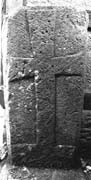
Object type: Slab, possibly a coffin lid
Measurements: L. 108 cm (42.5 in); W. top 41 < 51 cm (16 < 20 in); base 50 < 61 cm (19.5 < 24 in); D. 13.5 cm (5.5 in)
Stone type: Medium-grained, weakly glauconitic sandstone; no Exogyra shells, not badly corroded. Shaftesbury Sandstone Member, Upper Greensand Formation, Lower Cretaceous
Plate numbers in printed volume: Pl. 163
Corpus volume reference: Vol 7 p. 129
(There may be more views or larger images available for this item. Click on the thumbnail image to view.)
A (broad): Only one face is carved, and this shows a long stemmed cross in relief, type B6, set on a rectangular base. The base and the horizontal arms extend the full width of the slab.
B and D (narrow): Both sides are sharply chamfered.
C (broad): Plain
Appendix A item (stones dating from Saxo-Norman overlap period or of uncertain date).
Although the shape of the cross is not unknown in pre-Conquest contexts (see Everson and Stocker 1999, ills. 84 and 86), crosses with V-shaped armpits tend to be more common in the late pre- Conquest or early post-Conquest periods (see also Shaftesbury 2–5, Ills. 92–5). The sharply chamfered sides indicate that this could have been a coffin lid, as the Royal Commision inventory suggests. There seems however no clear evidence to support their fourteenth century dating.
