Select a site alphabetically from the choices shown in the box below. Alternatively, browse sculptural examples using the Forward/Back buttons.
Chapters for this volume, along with copies of original in-text images, are available here.


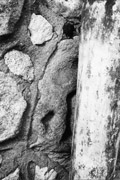
Object type: Part of cross-shaft
Measurements: H. 33 cm (13 in); W. 48 cm (18.9 in); D. unknown
Stone type: Greyish orange pink (5YR 7/2), moderately sorted, medium-grained, clast-supported, feldspathic quartz sandstone. The sub-angular to sub-rounded clasts vary from 0.3 to 0.5 mm. Ashover Grit Member?, Marsden Formation, Millstone Grit Group, Carboniferous (C.R.B.)
Plate numbers in printed volume: Ills. 115–17
Corpus volume reference: Vol 13 p. 153
(There may be more views or larger images available for this item. Click on the thumbnail image to view.)
A (broad): A register of a very worn, quite broad, two-strand interlace pattern on the left-hand side of the stone is contained by two wide flat mouldings that do not continue the full length of the stone. On the right, the stone is plain, seeming never to have been decorated.
B and D (narrow) and C (broad): Inaccessible
The dimensions of the stone and the dressed, but undecorated nature of one part of the face suggest this once formed the lower part of a cross-shaft. At 33 cm (13 in), however, it is more slender than the lower part of Bradbourne 1, which, at its narrowest is 43 cm (17 in). This and the broader, flatter nature of the angle mouldings thus imply that this stone probably represents the lower part of another shaft from the site, which, unlike the surviving portions of no. 1 included interlace in its repertoire of decoration. This in turn, might imply that Bradbourne 2, which also preserves a panel of interlace (albeit of a different type), may have been part of this monument.
