Select a site alphabetically from the choices shown in the box below. Alternatively, browse sculptural examples using the Forward/Back buttons.
Chapters for this volume, along with copies of original in-text images, are available here.


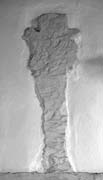
Object type: Cut-back figure (from a rood or narrative carving)
Measurements: H. c. 30 cm (51 in); W. (near the top) c. 40 cm (15.7 in); (at the base) c. 25 cm (9.8 in); D. unknown
Stone type: Oolitic limestone, too high for detailed examination
Plate numbers in printed volume: Ill. 41; Fig. 31L
Corpus volume reference: Vol 10 p. 138-9
(There may be more views or larger images available for this item. Click on the thumbnail image to view.)
The cut-back remains of a tall, slender figure with its feet resting on a square section string-course. The bottom of the string-course is c. 6 m (c. 20 ft) above the present nave floor. The figure is vertically elongated. The outline of the head is square. The arms seem to be bent at the elbows, possibly crossed across the body and holding something in each hand that projects on either side of the neck. Alternatively the arms may be bent back up with something held in each hand. A third possibility is that the figure is standing in front of an arcade of arches of which all that remains is the springing on either side of the neck.
It has been suggested that this is a supporting figure for a crucifixion, and the figure of Mary in the Ramsey Psalter (London, British Library MS Harley 2904, fol. 3v) is indeed similarly elongated and sharply tapering (Temple 1976, cat. 41, ill. 142; Raw 1990, pl. XIV). It is important also to remember that the remaining outline might be narrower that the carved figure, with the present edges simply representing undercutting to create the effect of a figure in-the-round. However, when taken in conjunction with the building depicted on the panel on the south side of the chancel arch (Bibury 7, Ill. 42), it would seem possible that the figure might be part of a set of narrative scenes — perhaps depicting episodes from the life of Christ. The figure's slender proportions and apparent lack of clothing might in this case suggest a close-wrapped body, such as Lazarus coming from the tomb.
