Volume 8: Western Yorkshire
Select a site alphabetically from the choices shown in the box below. Alternatively, browse sculptural examples using the Forward/Back buttons.
Chapters for this volume, along with copies of original in-text images, are available here.
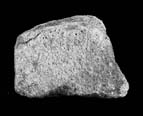
Current Display: Ripon 05, West Riding of Yorkshire


Overview
Object type: Fragment of cross-arm [1]
Measurements: H. 14 cm (5.5 in); W. 12 cm (4.7 in); D. max. 6.5 cm (2.6 in)
Stone type: Sandstone, pale yellowish brown, coarse to granular, with sparse quartz pebbles. Quartzose with some feldspar, white kaolinite patches. Carboniferous (Millstone Grit Group). [G.L.]
Plate numbers in printed volume: Ills. 647-9
Corpus volume reference: Vol 8 p. 237
(There may be more views or larger images available for this item. Click on the thumbnail image to view.)
Present Location
Mercer Art Gallery, Harrogate
Evidence for Discovery
Three fragments of pre-Conquest crosses were recovered from excavations in 1955 by A. Paget-Baggs for the Ancient Monuments Inspectorate of the Ministry of Works in the area of the Lady Chapel of the Minster (demolished in the sixteenth century), in advance of building cottages which now occupy part of the area (Hall 1995, 15). The site lies to the north of the present east end of the Minster, west of St Marygate near its north end. Two fragments of carved stone crosses Ripon (St Peter and St Wilfrid) 5 and 6) were found within the southern half of the chancel: these were not in situ and could not be related directly to any of the graves in the same part of the building (Hall and Whyman 1996, 125). A third fragment (Ripon (cathedral, St Peter and St Wilfrid) 12), described by the excavator as a small portion of an arm, possibly but not likely part of Ripon (cathedral, St Peter and St Wilfrid) 5 because 'the intertwining of the decoration is rather more open', has not been located (ibid., 127–8: see Appendix C, p. 291). Ripon (cathedral, St Peter and St Wilfrid) 11 below, grouped with 5 and 6 in the museum, was not described.
Church Dedication
St Peter and St Wilfrid
Present Condition
Incomplete but in good condition
Description
A (broad): A corner of one arm of a cross-head, it is edged at the side by a flat moulding and at the top or end of the arm by a triple roll moulding. Within these borders is part of the termination of a fine-stranded interlace pattern, possibly turned pattern D with outside strand.
B (narrow) and C (broad): Missing
D (narrow): Only part of the triple edge moulding at the end of the arm survives.
E (top): Dressed plain
Discussion
Date
Late seventh to early eighth century
References
Hall 1995, 15; Hall and Whyman 1996, 125, 127; Tweddle 1996, 129, cat. 2, pl. IV, C–D; Coatsworth 2006, 22, pl. 5b
Endnotes
[1] The following are general references to the Ripon stones: Allen 1890, 293; Collingwood 1932, 48; Brown 1937, 95; Mee 1941, 306; Bailey and Cramp 1988, 16; Lang 1991, 17, 84; Hall 1995, 15; Hadley 2000a, 235.