Select a site alphabetically from the choices shown in the box below. Alternatively, browse sculptural examples using the Forward/Back buttons.
Chapters for this volume, along with copies of original in-text images, are available here.


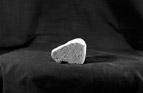
Object type: Cross fragment
Measurements:
H. 5.5 cm (2.2 in); W. 7.5 cm (3 in)
D. 6.5 cm (2.6 in), on the assumption that the right-angled corner is vertical.
Stone type: Pale yellowish brown (10YR 6/2), well sorted, clast-supported, quartz sandstone. The sub-angular to sub-rounded clasts vary from 0.3 to 0.4 mm, but are dominantly 0.3 mm across. The clasts are dominantly quartz, but a few pink feldspars are present. Helsby Sandstone Formation, Sherwood Sandstone Group, Triassic (C.R.B.)
Plate numbers in printed volume: Ills. 261–8
Corpus volume reference: Vol 13 p. 207-208
(There may be more views or larger images available for this item. Click on the thumbnail image to view.)
A (?broad): With right-angle to right. Smooth surface, showing irregular bedding near the top corner, and a hint of relief to the left.
B (?narrow): Right-angle to left. Smooth surface for 3.5 cm (1.4 in) from the left edge, the remainder to right slightly higher and irregular, possible carving
C (?broad): Break across the stone revealing a dowel-hole running diagonally from upper right down to the left and opening into B in the area where that face may be carved. Full diameter of dowel-hole broken away; its greatest surviving width is 2.3 cm (0.9 in).
D (?narrow): Not present
E (?top): Irregular broken surfaces
F (bottom): Flat diagonal break, from which a raised area of stone projects around the end of the dowel hole.
This could be, but does not have to be, part of the same monument as Repton 2. The dowel hole diagonal to A and B suggests a complex element, possibly part of a cross-head.
