Select a site alphabetically from the choices shown in the box below. Alternatively, browse sculptural examples using the Forward/Back buttons.
Chapters for this volume, along with copies of original in-text images, are available here.


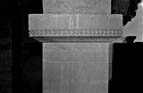
Object type: Impost
Measurements: H. 23 cm (9 in); W. (east–west) 77 cm (30.3 in); D. (north–south) 42 cm (16.5 in)
Stone type: Greyish orange (10YR 7/4) grain supported, shelly oolite with sparry matrix with indistinct ooliths. Ooliths 0.2 to 0.8 mm in size and shell debris 3 to 4 mm in size. Bedding parallel to the base and top of the capital. Cleeve Cloud Member, Birdlip Limestone Formation, Inferior Oolite Group, Middle Jurassic.
Plate numbers in printed volume: Ills. 107-9; Fig. 22J
Corpus volume reference: Vol 10 p. 159
(There may be more views or larger images available for this item. Click on the thumbnail image to view.)
In situ, but doubtless reset when the chancel arch was rebuilt 1850–1 (see Daglingworth 1 and 2 above).
Through-stone chamfered impost, decorated with a band of pelleting 4 cm high. There are traces of red paint on the pelleting.
The impost is very similar to the chancel-arch imposts from Coln Rogers (nos. 1 and 2, Ills. 89–94) and this, together with the use of pilaster strips on the naves of both churches, suggests that Daglingworth and Coln Rogers churches are of similar, eleventh-century date. Further evidence for the Anglo-Saxon date of the chancel arch is offered by a watercolour drawing in the church, which shows the arch with the same capitals and 'Escomb fashion' jambs before it was restored in 1845 or 1850 (Taylor and Taylor 1965, i, 188–9).
